
🌼 Bee Pollen
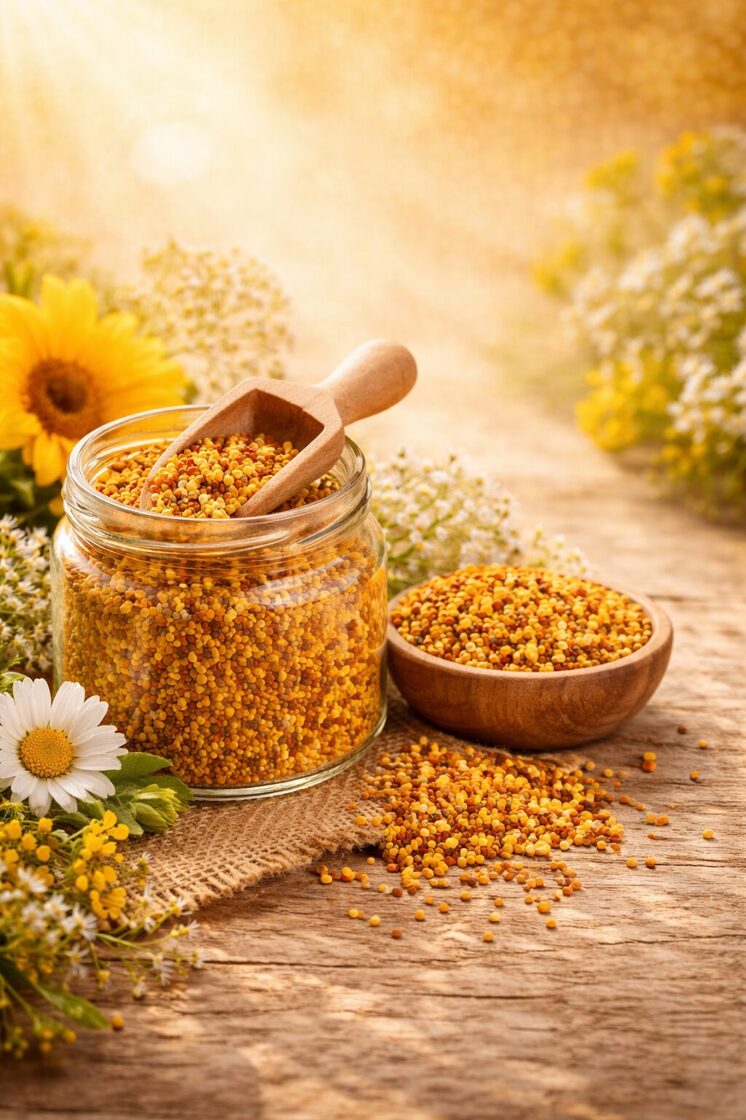
Bee pollen contains carbohydrates, vitamins, essential amino acids, proteins, minerals, enzymes, and many other valuable nutrients.
These are important substances needed for the growth, development, and overall well-being of the human body.
The use of bee pollen may help to:
support a healthy metabolism
reduce nervousness and fatigue
improve sleep quality
support the body during the recovery period after serious infectious illnesses, injuries, or surgery
Bee pollen is also known to help normalize digestive tract function and intestinal microflora.
The natural antibacterial compounds found in pollen may help suppress harmful intestinal microflora and support a healthier bacterial balance in the gut.
It is often used to:
improve appetite
increase energy and stamina
support work capacity and vitality
strengthen the body’s natural defenses
Directions for Use
It is recommended to take bee pollen during or after meals.
Recommended daily amount:
Adults: 20 g per day
(approximately 1 heaped tablespoon)Children 3–5 years: 12 g per day
(approximately 1 heaped teaspoon)Children 6–12 years: 16 g per day
(approximately 1 tablespoon)
How to use:
For preventive use, take the daily amount in the morning
For therapeutic use, divide the daily amount into 3 portions
Bee pollen is usually taken in courses of 1–3 months.
For regular use, it is recommended to consume at least 250–300 g per year.
⚠️ Important Note
Bee pollen is a natural food supplement, not a medicine.
People who are allergic to bee products or pollen should use it with caution or avoid it entirely.
If you are pregnant, breastfeeding, or have a medical condition, consult your healthcare provider before use.