
🍯 Creamed Honey
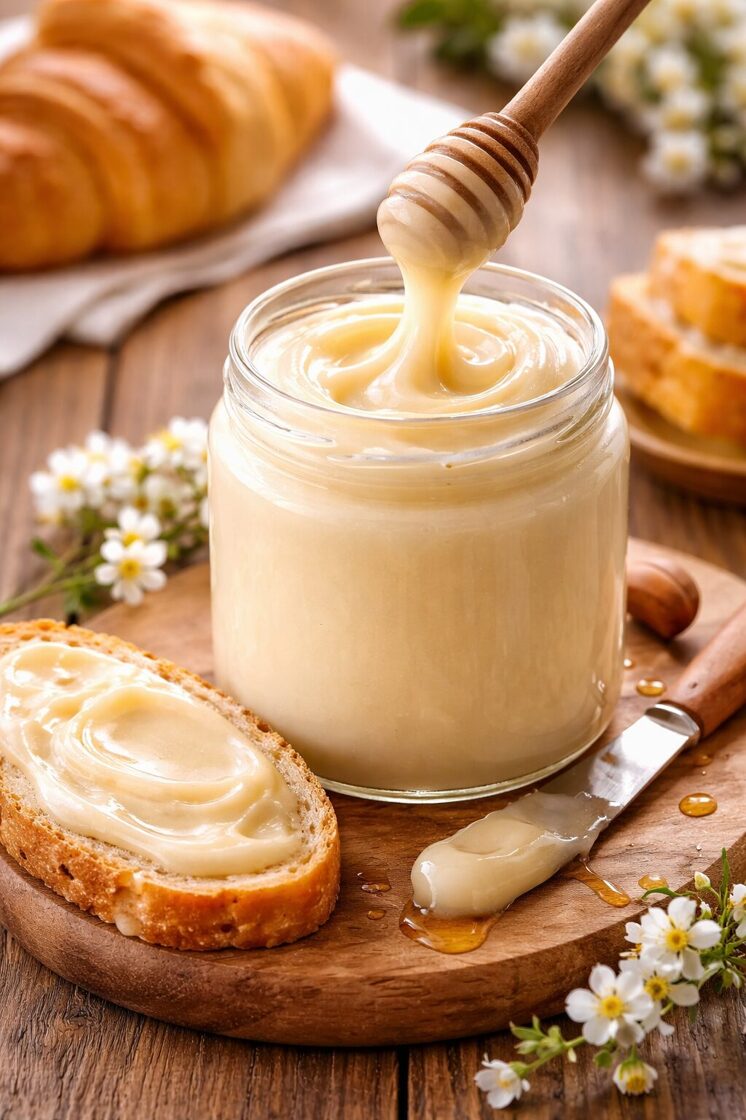 Many people think that creamed honey is simply whipped honey, like whipped cream — but that is not actually the case.
No air is “beaten” into the honey.
Here is a little explanation of how we, and many other beekeepers, create this soft, smooth, creamy honey.
How Creamed Honey Is Made
As we know, honey naturally goes through the process of crystallization.
Over time, it becomes firm — and sometimes so solid that trying to scoop it out of the jar can feel like a challenge for both you and your favorite spoon.
Honey naturally contains glucose, sucrose, and fructose, and during storage it gradually forms larger, coarse glucose and sucrose crystals.
After the honey is extracted from the combs, we pour it into a large mixing tank and allow it to rest for a few days so the natural crystallization process can begin.
The mixer is equipped with large vertical paddles and an automatic system that slowly stirs the honey from time to time.
This gentle mixing process helps break down the large crystals into much smaller ones, creating the wonderfully smooth, fine, creamy texture that makes creamed honey so enjoyable.
Smooth, Spreadable & Ready to Enjoy
And that’s how this delicious treat becomes ready for everyday use —
without breaking your favorite spoon.
Creamed honey is perfect for enjoying with your favorite foods and drinks, thanks to its:
soft texture
smooth consistency
easy spreadability
naturally sweet, delicate honey flavor
Why People Love Creamed Honey
Creamed honey is especially loved because it is:
easier to spread on bread or toast
smoother and more pleasant to eat by the spoonful
less messy than hard-crystallized honey
ideal for tea, breakfast, desserts, and snacks
Natural Energy & Everyday Wellness
Honey may help:
support energy levels
improve mood
support daily performance and vitality
Enjoy honey to feel more energized and support your well-being naturally.
Recommended Daily Amount
It is best to take honey in several portions throughout the day.
Suggested daily intake:
Children: 30 g per day
Older adults: 60 g per day
Working / active adults: 90 g per day
How to Use
Honey is traditionally recommended:
1.5–2 hours before meals, or
3 hours after meals
It is best enjoyed:
with warm boiled water
with tea
with milk
For traditional use, honey is often taken diluted.
Traditional recommendation:
Honey dissolved in warm water may help reduce stomach acidity and ease discomfort such as heartburn
Honey dissolved in cold water may increase stomach acidity
⚠️ Important Note
Not recommended for children under 12 months of age.
People with allergies to bee products should use with caution.
Honey is a natural food product, not a medicine.