
🐝 Bee Bread
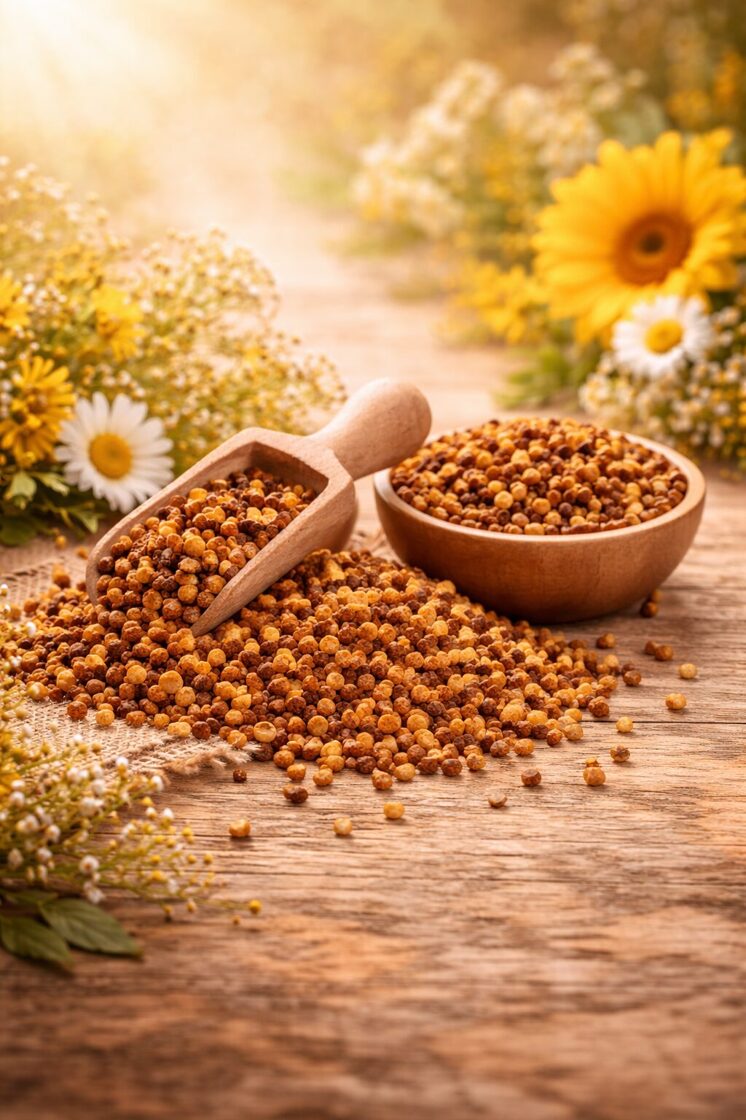
Bee bread is made when bees collect pollen, mix it with honey and natural enzymes, and pack it tightly into honeycomb cells.
As a result of this natural process, lactic acid fermentation takes place, and the final product becomes what is known as bee bread.
Scientists have found that bee bread contains around 25 macro- and microelements, as well as:
B-group vitamins
Vitamins A, D, C, P, and E
enzymes
hormone-like substances
phytoncides
and valuable minerals such as potassium, magnesium, iron, iodine, and others
Bee bread is especially recommended during spring and autumn, when the body may need extra support to help maintain its natural defenses.
It may help to:
support the body during fatigue and recovery periods
help delay premature aging
support the body during mental, emotional, and physical stress
reduce difficulty concentrating
help restore energy and vitality
Directions for Use
Recommended daily amount:
Adults: 1–2 teaspoons, 2 times per day
Children 3–5 years: up to 1 teaspoon per day
It is not recommended late in the evening, as it may have a stimulating effect and could interfere with sleep.
How to take it:
Keep the bee bread in your mouth for at least one minute, chewing it slowly and mixing it with saliva before swallowing.
It can also be added to:
honey
yogurt
breakfast muesli
Recommended Use Cycle
Bee bread is best taken in courses 2–4 times per year, with at least a 4-week break between each course.
⚠️ Important Note
Bee bread is a natural food supplement, not a medicine.
People who are allergic to bee products or pollen should use it with caution or avoid it entirely.
Not recommended for children under 3 years of age.